Ladder
Ladder: credential control
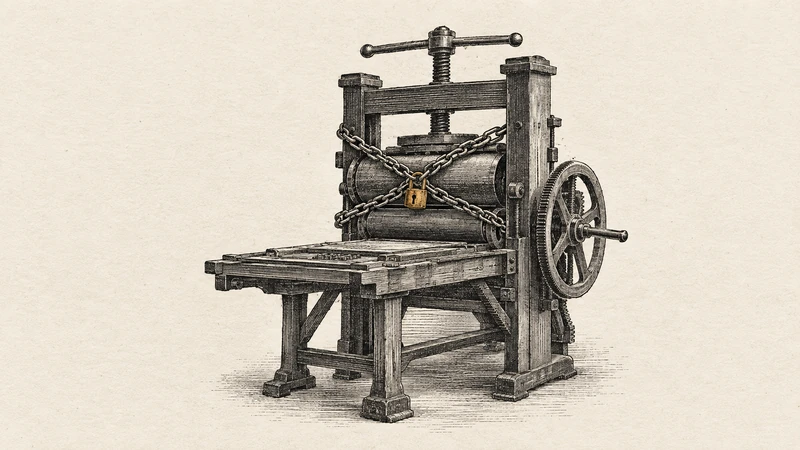
A government decides who counts as a journalist through passes, accreditation or licences issued to individual reporters. Officials may refuse, suspend or revoke these credentials, or attach new conditions to them. Because many press areas admit only accredited reporters, control of credentials works as control of access.
The number of entries reflects the depth of this record, not the severity of a country's conduct.
Narrow this ladder
1Restrict
Limiting access or credentials for particular reporters or outlets: bans from briefings or buildings, pool changes, credential revocations, accreditation refusals.
On November 7, 2018, the White House suspended the hard pass of CNN's White House correspondent, Jim Acosta, after what Gulf News called a "heated confrontation" between Acosta and the president of the United States, Donald Trump, at a news conference after the country's midterm elections.
Reversed 19 November 2018 · 8 sources · Full entry
After CNN's Jim Acosta questioned President Trump at a news conference and briefly kept hold of a microphone as an intern reached for it, the White House suspended his hard pass, the standing credential letting reporters enter the grounds; a federal judge ordered it restored a week later.
Reversed 19 November 2018 · 2 sources · Full entry
On February 25, 2025, the White House announced that it would decide which journalists join the press pool, the small rotating group of reporters who cover the president of the United States in spaces such as the Oval Office and Air Force One and share what they gather with other outlets.
Sustained 22 September 2026 · 3 sources · Full entry
On September 19, 2025, the United States Department of Defense, the federal department that provides the country's military forces, issued new credential rules for reporters at the Pentagon, its headquarters building, under the Secretary of Defense, Pete Hegseth.
Ongoing 9 April 2026 · 5 sources · Full entry
Beginning on October 15, 2025, reporters from at least 30 news organizations vacated the press workspace at the Pentagon, the headquarters of the United States Department of Defense, rather than sign the department's new credential pledge, with a deadline of October 17 to remove their belongings.
Ongoing 9 April 2026 · 2 sources · Full entry
On September 18, 2026, the president of the United States, Donald Trump, announced on Truth Social, a social media platform, and in the Oval Office that CNN, MS NOW and Politico would be banned from the White House, the president's office and residence in Washington, D.C. He described the outlets'…
Ongoing 21 September 2026 · 11 sources · Full entry
2Pressure
Using state power short of prosecution to change coverage: regulatory threats, licence reviews, funding cuts, lawsuits by officials, official "fake news" or "foreign agent" labels, advertising pressure, tax audits.
Turkiye's Council of State suspended 2018 rules under which the presidency's Communications Directorate could deny or cancel the yellow and turquoise press cards that let reporters work and enter official buildings, after finding the grounds for denial too broad.
Note: A national regulator controlled the credential every journalist needs to work and enter official buildings, denying or delaying cards for hundreds of reporters for years.
Reversed 1 April 2021 · 2 sources · Full entry
3Punish
Legal or physical action against individual journalists or sources: subpoenas and record seizures, prosecutions, arrests, detention, expulsions, visa denials, assault where a government actor is involved.
Zimbabwe's High Court ruled that Daily News journalists could not be accredited to work as reporters until their newspaper's publisher had itself been registered with the government's Media and Information Commission.
Note: Journalists at a named newspaper were denied the individual credential needed to work at all, conditioned on a separate corporate registration the government withheld for years.
Upheld by a court 12 May 2005 · 2 sources · Full entry
China ordered American correspondents for The New York Times, The Wall Street Journal and The Washington Post to leave the country, in a reciprocal response to the Trump administration capping the number of Chinese state-media employees allowed in the United States, which itself followed China's ea…
Sustained · 1 source · Full entry
A survey by the Foreign Correspondents' Club of China found the government refused new press credentials to journalists tied to American outlets and cancelled or refused visas for correspondents at the New York Times, Wall Street Journal and Washington Post through 2020.
Note: Credentials and visas needed to work at all were denied to correspondents at three named outlets on a national scale, on top of earlier individual expulsion orders.
Sustained 3 March 2021 · 3 sources · Full entry
Kazakhstan's government adopted rules allowing journalists' accreditation to be withdrawn for six months over conduct at a news event, including asking off-topic questions, while proposing separate rules letting the foreign ministry deny foreign media accreditation over any violation of Kazakh law.
Note: A government rule lets officials withdraw a journalist's accreditation for the content of the questions asked, not only for building or event access.
Ongoing 3 September 2024 · 3 sources · Full entry
4Silence
Removing outlets or channels from the public sphere: closures, licence withdrawals, forced sales, blocking and shutdowns, prior restraint, nationalisation.
Nine months after Adolf Hitler became chancellor, Germany's Schriftleitergesetz, or Editors Law, required journalists to register with a new state-controlled Reich Press Chamber and barred non-Aryans from the profession, while directing editors to omit anything judged harmful to the Reich's standin…
Reversed 8 May 1945 · 2 sources · Full entry
While Spain's civil war continued, the Nationalist government led by Francisco Franco enacted a Press Law in April 1938 requiring government permission to found a newspaper, work as a journalist or direct a paper, alongside continued pre-publication press controls and years-long prison terms for va…
Reversed 1 April 1977 · 1 source · Full entry
All ladders · Credential control: by country and year · The United States chapter